Showing posts with label comfort. Show all posts

Thursday, September 18, 2014

Shimano MX80 Saint Pedals Review (or how I found the best platform pedals I've tried to date)

If you've hung out in this space for any length of time, you are likely aware of my incessant pedal conundrum. It isn't so much that I have difficulty finding a bicycle pedal that I like, but rather that I always seem to have numbness issues when I ride. I have run the gambit of types of pedals from cruiser to platform to SPD (clipless) style, but the pain never seems to go away. Over time, I've come to understand that this is really more lower-back related than caused by my pedal choice, but there are certain pedals that do a better job of keeping this numbness to a minimum.
Shimano MX80 Saint pedals
*Image from Shimano
While waiting for the IndyFab bicycle to be completed, I went on a serious hunt for pedals that might work for the new bike, and during that time arrived upon the Shimano MX80 Saint pedals. I know it seems a bit strange to some to use a platform pedal on a road bicycle, but I won't get into my reasons here for not using SPD's nor any other form of clip(less) style pedal. Instead, I'd like to share why I really like these particular pedals and why you, if you're into more of a platform style, might appreciate these as well. Praises have already been sung for these pedals by BMX riders, downhill and other mountain bikers, but I think these could easily translate to road bikers who opt not to go down the clipless route.

First of all, the platform is really wide (each pedal measures approximately L-3.75" x W-4" x H-0.75" or L-9.5cm x W-10.1cm x H-1.9cm). This may not seem like a huge deal, but it provides support for the entire width of my foot, preventing the sides from spilling over the outer edge. I don't have a particularly big or overly wide foot, but it's always nice to have support on longer rides. I had noticed that while width wasn't always an indicator of foot numbness, I appreciate having the wider style for support purposes.

Their weight is pretty decent too (especially for a platform pedal). The pair together weigh about 500g (or just over a pound). If you're someone who's looking to strip every ounce or gram off of a bicycle, you'll probably choose a clipless system over a platform anyway, but it's nice to find a set of platforms that don't weigh more than my frame (which is only a slight comparison over-exaggeration).
The pedals blend pretty nicely with the Ultegra crank/kit
As for style, they are probably some of the least offensive platforms I have put on a road bike. Somehow, they really don't seem out of place to me (as many I've tried have appeared). They stand out more in the photo above than they do from a distance, but even with a closer shot, I still don't find them particularly obnoxious on the bike.

One of the nice features about these platforms is the pins. Those little nub-like points on the pedals are extremely good at keeping my foot where it needs to be, but not so ridiculously sticky that I can't move my foot if need be. It's kind of a best-of-both-worlds situation in that I don't worry about my feet slipping in wet conditions, nor is it impossible to shift them if I need to move just slightly one way or another at some point during a ride.

The thinner profile on these pedals may not seem like a big deal for someone on a road bike, but I appreciate it for the aesthetic value, and every once in awhile I wonder off the beaten path on this bike and its slimmer height has come in handy on these occasions. Additionally, the pedals are built with a strong axle intended for harsh rides, so I think they will do well over the long haul on a road bike as well.
I have read that some people experience a "clicking" when using these pedals. Some have become so frustrated with the sound, that they've elected to no longer use the pedals. Unfortunately, I found a similar problem pretty quickly after mounting the pedals. I don't know if it's a luck of the draw kind of thing, or if some are just less sensitive to the sound, but I wasn't thrilled to hear a click-click-click with every pedal stroke myself. It quickly became a huge annoyance while pedaling - in quieter spots particularly as it was all I could hear. But, Sam to the rescue. He removed the pedal that was making the noise and stuffed a whole lot of grease (he used an automotive/high mileage version) into the bearings and voilĂ , problem solved. When the same clicking started happening again a couple of weeks later, we realized it was the other pedal. So, a word to the wise, if a clicking noise presents itself, I'd highly recommend packing both pedals. Since the greasing, I have had zero issues with any kind of unexpected noises from these pedals.

The pedals retail for about US $100, but as of the date of this post, with a little research online it is easy to find a set between US $52 and $70, which seems an entirely fair price for something that works pretty splendidly as far as I'm concerned.

Surprisingly, I found a pedal that doesn't appear overly out of place, is comfortable, and that is able to keep my shoe on the pedal without a lot of effort. I have put only about 700 miles on these to date, but I think it's enough to know that they work - and they work well. As always, finding something that works is not always an easy task, but these are pedals I don't mind putting my feet on day after day.

Wednesday, August 15, 2012

To Chamois or Not to Chamois

With all the riding taking place these days, I have found myself pondering the idea of cycling shorts or pants with some sort of padding. In the last six years, I have tried padded shorts only one time, and swore that I would never ride in them again because they were doing more harm than good.  However, when putting more time in on the saddle, even the best of leather saddles cannot seem to protect me from saddle sores and discomfort.
*Image from Ibex
Typically, I ride in lycra/nylon blend capri's or shorts, and these normally work just fine for trips under 20ish miles. The longer rides taking place have brought about new sorts of pain though, and while my saddle is very comfortable, extended mileage can still cause me to recall that I had similar inclinations to purchase padded cycling gear last year when miles on the bicycle increased.
*Image from Team Estrogen

I'm concerned that perhaps it's a bit too close to the ride to make this sort of decision, however, I am curious about what others have found helpful. I haven't decided yet what I plan to do, but part of me thinks this might be worth a try. While I understand that much of this is a personal opinion/decision kind of item, when you ride longer distances, do you wear some sort of chamois or padding, or do you find that going without this works just fine? If you don't wear cycling specific bottoms, do you do anything else to assist with discomfort on long rides? Your thoughts are very much welcomed and appreciated.

Friday, May 18, 2012

{Part 2} Rivendell Betty Foy vs Sam Hillborne: Are They Interchangeable?

{If you would like to read the first post in this series, please click here}

After making the decision to buy the Betty Foy frame, I knew it would not be something we could build up immediately because the parts would more than double the cost of the bike, and it just wasn't in any way going to fit into the budget for awhile. Not horribly surprising, we had quite a few parts around the house that were for projects never completed, back up parts, wrong parts for other projects, and so on, so very little needed to be purchased to build up the complete bike. I suppose that is the "good" that comes from the never-ending bike search/builds, and also allowed for Betty to get built up quicker than I anticipated.
The infamous Betty Foy heart lugs
Before I get too far along in the process of sharing my opinion and/or comparison of the Betty and the Sam, I should point out that some size changes took place recently at Rivendell for the Betty Foy. She now comes in fewer sizes that are supposed to cover a wider range of riders' heights. I was a little unsure of what to do when I discovered that the newest shipments will come in 50cm, 55cm, and 60cm (for the record, the old sizes were 47cm, 52cm, 58cm, and 62cm), but after some discussion with the folks at Riv, I figured I would give the 50cm a go, particularly after my experience with the far too small 42cm Soma.
Quite honestly, the 52cm would likely have been just a tad large, and while it could be adjusted with stems and so on, I am actually grateful that I waited for the size in between the two former variations to actually commit to the purchase.
More of the Betty hearts
Part of my trepidation with the purchase of a Betty frame had to do with information I had read about the bikes, and the idea that it would ride and compare very similarly to the Sam Hillborne. Duplicate bikes isn't what I am after, but my curiosity simply got the best of me and I needed to know if I could truly sacrifice one for the other. My #1 reason for wanting the Betty was to have a frame that isn't a diamond shape. Particularly in the warmer months, I wear many more skirts/dresses and I wanted the option to wear them on my bike, especially when roaming around town. I know that some are capable of performing this task on a diamond frame, but I am not at all graceful and I know my limits, so having some kind of dip in the frame is a necessity unless I want to change before riding.
Side by side - Sam Hillborne and Betty Foy
The set up of each of these bikes is comparable, with the same or extremely similar components, however, there are differences. The Betty is an 8x3 (24 speed) and the Hillborne is a 9x3 (or 27 speed). To me, this is of little consequence as it doesn't affect my ability to get where I need to go, nor the speeds reachable on either bike. Betty has fenders, a rear rack, and the same handlebars (positioned the way they were intended or "right side up"), and the Hillborne has Grand Bois Hetre tires in cream, while the Betty has black Schwalbe Marathon's. The stems are different on each of these - the Hillborne has a Nitto stem, while the Betty has an Origin8 stem (more on that in a post at another time) that has a significantly greater reach than the Nitto. The saddle bags on each are different as well, and please note that the basket was just added to the Betty, so my thoughts are prior to that addition.
Betty and Sam - both gorgeous, but different
With that bit of background, I will say that while both bikes are comfortable and fun to ride, I find them to be quite dissimilar. Although the looks are undoubtedly Rivendell aesthetics, personally I could not imagine doing a long distance ride (let's say, greater than 15-20 miles) on the Betty, while I have completed many on the Hillborne. Take that information for what it is worth, particularly coming from a rather fussy rider, but there is definitely a different feel when changing from the Hillborne to the Betty or vice versa. I find the Betty to be more upright (not as upright as many European city bikes, but more so than the Hillborne), but while certainly usable for a longer distance ride, may cause discomfort to those more sensitive to positioning. While some might argue this sensation is due to lack of drop bars on the Betty, I will point out that I don't have drop bars on the Hillborne either, and have not experienced that feeling on that particular bike unless I have traveled some distance greater than would be a typical "long" ride for me, and that is due to my own wrist/hand sensitivities, I believe (though please feel free to argue otherwise, if you see it differently or think I am missing something in my thought process). I should also add that there are folks who own the Betty Foy and do use her as the long distance/road bike, as well as riding in the city with her, so while I think there are differences between the two models, it is also apparent to me that some find her perfectly capable and comfortable to take on longer rides. I wonder if this is just differences in rider comfort, size, set up of the bike, or simply that by comparison for any given individual, the Betty Foy may indeed ride like a road bike?
These two bikes are also equipped with the same saddle (although I've had the Hillborne Brooks B-72 laced in the past to help with spreading), so I don't think this is where the differences are coming into play. The reality is that they are simply different in my opinion, and even if one were to get each bike set up with the exact same components, it would be impossible for them to feel exactly the same, and improbable to feel/ride close to the same way. Is the Betty faster than most typical city bikes? I would say most certainly, but due to even very small changes in geometry, it simply feels different, and in my opinion, those differences make it more pleasant and more comfortable for me to use the Hillborne for longer and/or faster rides.

In many ways, I begin to feel as though I'm trying to find similarities in two completely different bikes, comparing an apple and an orange in some respects. Just as bikes from various manufacturers/designers are different, I have a difficult time understanding how these two bikes are interchangeable. While it is not an issue to me personally, I am curious as to how and why these are often viewed as equals, and even thought to be easily used for the same purposes. As I mentioned in the first of these posts, I was prepared to deal with the reality of possibly having two bikes that would ride the same, but I have yet to find that they could be used for the same riding tasks. I understand that I've only had them together to compare for a fairly brief time of a few months, but even prior to adding the heavier bag to the Betty, or the basket, the posture I use on her is simply different - not bad, but different. So, I am left to question whether I would be able to give the Hillborne up in exchange for the Betty, or vice versa.

It would be nearly impossible for me to know ultimately what will happen with these two bikes, but as it stands, it seems that they each have their own functionality, ride differently, and will work well for my personal purposes. So, for the time being I will ride them both and continue to evaluate whether they are interchangeable for me, or whether they can each hold their own spot in the bike fold.

Wednesday, December 21, 2011

Two City Bikes: Bella Ciao Superba and the Electra Amsterdam

It's taken a bit of time, but I am finally able to sit and write out thoughts on the borrowed Electra Amsterdam "La Fonda del Sol" and the Bella Ciao "Superba."  I should first point out that it is a bit of an odd comparison to attempt to contrast these two very different bicycles. However, I also think it's valuable to have something to compare to/with, so hopefully it will help me sort out my dilemma with the Bella Ciao, and perhaps provide some insight for others as well. (I should also note that I couldn't quite figure out how to ride two bicycle simultaneously, nor could I find anyone when I had time to ride the second bike, so some of the photos included are less than glamorous. My sincere apologies).
The Electra Amsterdam is a colorful beast (I use the term "beast" with an affectionate intention) with a 3-speed Shimano Nexus internal hub. It has a rear coaster brake and a front hand brake, providing enough stopping power for city riding purposes. It is also equipped with a rear rack, bell, battery powered tail light and bottle driven head light.
While riding this bicycle, I feel happy - literally, I can't stop smiling. It is almost as though it creates a good mood, even if I'm feeling a bit grouchy. It also rides large. What I mean by this is that it feels very expanded. The rider sits back (part of Electra's "flat foot technology," no doubt) and there is a lot of room between the saddle and the handlebars. It feels big, but comfortably so. The handlebars sit wide and I'm always relaxed when riding this bicycle. The saddle is comfortable for short distances and is made of a leatherette material. For longer rides, I find the saddle uncomfortable, but for sub-6 to 8 mile rides, it works just fine.
Even the Amsterdam's saddle is fun!
As stated in a past blog post, it's difficult to ride this bike and not get the attention of those around. I have to say that it certainly catches many an eye because it isn't the typical color scheme found on most bicycles. Whether this is good or bad for the rider depends on the individual. For me, I love the opportunity to talk to people about a bicycle, but I can also see how it could get to be a bit annoying if the rider is in a hurry to get a task done and someone is trying to ask about the bicycle. Although I tend to think I am a wallflower, I doubt I would find this so attractive if I were, so I suppose it is something each person must figure out for him/herself. At minimum, the rider should be prepared for the occasional comment from a passing car or other cyclist.
The rear rack is rated to carry up to 25 pounds (a bit over 11 kg). In all reality, for many this is not a high enough rating to use this to haul groceries and other heavier items. While it is doable, I would prefer a higher rating for instances when I have more of a full load to carry. For anyone wondering about the frame, it is made of aluminum and the fork of steel. I am not normally a fan of aluminum bicycles (particularly for a city bike), but this one seems to do the job without creating hand vibrations, which is my biggest concern with aluminum.
 The Bella Ciao and Electra are just about as different as two of the same "type" of bicycles can be in many respects. On the surface, they seem to be a similar bike, but when digging in the rider can definitely see and feel the differences. The Bella Ciao feels petite and bird like when riding. The handlebars sit narrower (coming in closer toward the body) and the seating position has the rider positioned more directly over the pedals. When riding the Bella Ciao I feel proper, for lack of better phrasing at the moment. I sit up high and more vertical, versus the relaxed position of the Electra. The saddle is made of leather, is narrower (and thinner), but is much more comfortable over longer distances.
Bella Ciao saddle vs Electra Amsterdam saddle
Both of the bicycles have rear racks, however, the Bella Ciao's rack is rated to carry up to 40 lbs (18 kg), which is nice because it's a bit more weight that can be transported. Not that I ever really carry 40 pounds of "stuff" with me, but it's nice to know that the rack can handle it if need be. I don't think I'd have ever guessed by looking at the two racks side-by-side that the Bella Ciao's handmade rear rack can carry more weight than the Electra. Which just goes to show that just because something appears stronger doesn't necessarily make it so. I do prefer the length of the rear rack on the Electra because it provides just enough space to be able to scoot things back a bit so that it doesn't hit my back while riding. I think it has to do somewhat the with rounded edge on the rear of the Bella Ciao rack. Looks-wise, I would give the point to the rack on the Bella Ciao. Put plain and simply, it's just daintier and prettier to behold.
Both bicycles come with fenders and a full chain guard, however, only the Electra has a skirt/coat guard on the rear wheel. This is not a huge deal to me, but could make a difference for some. Also, adding a skirt guard to the Bella Ciao is possible, so it shouldn't be a deciding factor necessarily. The grips on these bicycles are different as well. The Bella Ciao has cork grips while the Electra has coordinating leatherette grips. Personally, I prefer the cork (both for its looks and comfort), but I think that each seem to go with their respective frames, and I don't find either offensive.
Bella Ciao cork grips vs Electra leatherette grips
The lights! Oh, the lights. This is probably one of the most difficult things for me about each of these bikes. I dislike both systems, but for very different reasons. On the Electra, the head light is powered by a bottle driven system. When the rider wants to turn on the head light, she simply flips the bottle so that it connects with the wheel, which generates the power to light up the head light. When activated, the bottle system creates a good amount of drag on this bicycle. The nice piece of this lighting system is that it's only "on" while one is riding the bicycle (thus, there is only a sensation of dragging while it is engaged), but the down side is that it's only on while one is riding the bicycle...meaning that when the rider comes to a stop at a light or stop sign (or for any other reason), the hub is no longer powered, which means that the rider is less visible because the light has turned off. In addition, the tail light is battery powered rather than connecting to the system that lights the front of the bike. Personally, I would prefer not to have to worry about carrying around extra batteries.
On the Bella Ciao, the lighting system is part of the hub and the rider simply flicks an on switch to activate the head light. In the case of the Bella Ciao, it also powers the tail light, preventing any need to replace batteries. While this system seems ideal, the hub on the Bella Ciao creates a drag (even when it isn't on), which I initially thought was only in my head. I had a reader contact me who also owns this model and expressed similar concerns. She ended up taking her bicycle to her local shop where she learned that the the hub is a lower end model and the head light is a halogen light (rather than an LED light). Between the two items, it causes a dragging sensation as well as requiring more juice to generate the power for this particular light. To summarize, even when the light isn't on, it is still creating a drag, and when it is on, it needs more power.
Both of these bicycles have rear coaster brakes. In the past, I have always had coaster brake bicycles and they never seemed to bother me. Over the last 1.5-2 years, however, I have not owned a bicycle with a coaster brake, and unfortunately is isn't something I have easily become used to again. Because I am so incredibly klutzy, and have to start with a particular foot in the "correct" position, using the coaster brakes hasn't been my favorite experience. I have found myself using only the hand brake, which in turn causes me to pedal slower if there is a good deal of traffic, or if I think I may need to stop abruptly.
There are other differences (that can make a big difference to some riders) such as the tires, the bell (the brass bell on the Electra is a replacement - it comes with a coordinating colored bell), the shifting systems (Sturmey-Archer vs Shimano) and the pedals, but really it all comes down to what works for the rider. Personally, I am conflicted about each of these bikes. I have owned an Electra Amsterdam in the past and I sold it for a reason - it just wasn't what I was looking for in a bicycle. I didn't like the saddle for slightly longer distances, and replacement saddles weren't working for me (though I have learned much about saddles since that time). I also didn't like that it was so difficult to attempt to stand up and pedal on it due to body positioning. That said, it was probably my most ridden city bicycle because it was easy to use and not horribly heavy. I do currently own the Bella Ciao and have considered selling it - but for different reasons. It rides well, is functional as a city bike, and is quite beautiful. However, I am not certain it is the right bicycle for me. There are days when I ride it and think, "How could I get rid of this?" and there are other days when I just don't feel comfortable on it and think that it could find a good home with someone who would appreciate it and ride it more regularly.
I haven't figured out the answer for myself just yet. There are certainly pros and cons to a decision to move on to another bike; however, I also know that changes could be made to the Bella Ciao to make it more appropriate for me. I could take off the coaster brake and replace it with a roller brake, I could remove the dynamo hub and opt for a higher end model or remove the system all together and use battery operated lights, but in the end I question the additional costs versus either keeping the bike as is or selling it to someone who is looking for this very type of set up. With any decision, I have concerns and wonder whether the pocket book can handle any choice I make. In time, I am certain the right decision will make itself known, and in the mean time, I have the great fortune of riding two very interesting city bikes a bit longer.

Monday, December 19, 2011

Hangin' with an Old Friend: The Electra Amsterdam

In recent weeks I have mentioned that I have a second city bike in my possession for a long term temporary period. This bicycle is the Electra Amsterdam La Fonda del Sol which is part of the Alexander Girard series. I actually owned an Electra Amsterdam 3i in late 2009 until mid 2010, and it's been like having an old friend around having the opportunity to ride this adorable bike.
Electra Amsterdam "La Fonda del Sol"
My first impression of this bicycle after having almost 2 years in between riding mine and this borrowed one was surprisingly the same: It's so much fun to ride. I think if I am totally honest, the thing I love most about Electra bicycles is the very thing that others might completely despise. I love that they are so colorful and that people always say hello to me, wave wildly as I ride by or they drive by, and that I have the opportunity to have random conversations with strangers about bicycles. It is virtually impossible for me to ride this bicycle and not have a stranger stop me to ask about it, tell me how cute it is, or hear about how a particular individual would love to have such a bike. It's also impossibly difficult for me not to smile while riding this bike... and, who doesn't want that?
She's a dirty girl from all the mucky icy snow gunk, but still quite fun!
Okay, so we've established that I am a fan of the funky color scheme on Electra bicycles, but what else is there to this bike? Well, the nice thing is that one of the updates to the Amsterdam is the addition of a front hand brake as well as keeping the rear coaster brake. While I have recently found coaster brakes to be awkward and somewhat non-functional for me to use (despite having no issue with them in the past), the addition of the hand brake is nice not only for those of us who aren't as comfortable with the coaster brake, but it also provides additional braking power.
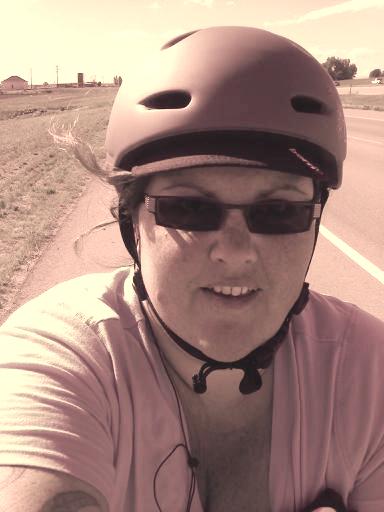
My experience with the Amsterdam is remarkably similar to my memory of it - almost surprisingly so. The things that I loved about it then I still appreciate and the things that were slightly bothersome are still a bit of a pain, but it's nice to experience it all over again. I'm going to be doing a bit of a comparison of this Electra and the Bella Ciao very soon, so I won't go into a ton of detail here, but suffice to say I am enjoying riding this bike and remembering why I bought mine a few years ago. Although it's a completely different feel than the Bella Ciao, Pashley, or Public Bikes, I think it could be a nice option for the right person, depending on needs and ride distance. As for me, I'm happily having random conversations with strangers and experiencing a bit of nostalgia while riding this fun bicycle. It has been quite fun to find this old friend, and have the chance to re-experience the ride.

Saturday, August 13, 2011

A Comfortable Bicycle

Last night, Sam and I went on a little group ride to get out of the house and ride bikes for a bit. I was feeling nauseous before we left and didn't think I was going to ride at all, but decided it was worth a go to see if the feelings waned before we got too far along. As luck would have it, I was perfectly fine for the whole ride, and made it through without issue.
Towards the end of our group ride
**Photo by Peter Schow
As a quick side note, if you're in the area, this is a great group to ride with at a slower-moderate pace, and they make stops for everyone to catch up if there are stragglers at the back, rather than just leaving everyone to fend for themselves. It's not quite a cruiser ride, but it isn't a race either, which is a nice relaxing pace, especially for a Friday evening.

Something I discovered, or perhaps I should say became more aware of last night was how comfortable I am on the Hillborne now. I've always found the ride quality to be nice, but it's been quite a process to get it to a point that I would say I'm actually comfortable on the bike. I had high expectations for this bicycle when we started building it last July to early August, and it really seems to have taken that year and several modifications to get it to a point that works - for me. Which is really the point of it all. My first real ride on the Hillborne last August (meaning more than 5-10 miles) was the Venus de Miles ride, and I was concerned that I wouldn't make it through because I hadn't had much time to ride him before that day arrived.
Tony Stark waiting to go on the Venus de Miles ride, August 2010
I made it through just fine, but had some issues along the way. I knew even then that some things would likely change, at least over time. The core of Tony hasn't been modified substantially, but things like the saddle and handlebars have been revised, as well as changing out to a triple crank that provided more range in the gears. The saddle, a Brooks Flyer, was too narrow for me with the handlebars up higher, but a switch to a wider B72 was the perfect solution. After a long bout of attempting to make the drops work for me on this bike, I finally gave up and looked for alternatives. The Northroad bars seem to be the answer.
Tony Stark in his current state of existence
I suppose my point in all of this is really to say that it isn't always as easy as one might think to find or build a bicycle that's comfortable from the start, and just because someone tells you that something is "supposed" to be on a particular bike doesn't necessarily make it right for you. Being open to changes to make it work better for the rider is vital. I can be incredibly stubborn about things when I think it's a must have (like keeping the drop bars on this bike), but allowing myself to admit that it wasn't perhaps the best choice for this bike, and this rider, was a godsend. While he still weighs a ton, and everyone passes me going up steeper hills (just ask the group from last night!), I am so happy to have him and enjoy rides now more than ever. Finally, the comfortable bicycle I was looking for is here... and now I'm off to ride!

Thursday, July 21, 2011

From My Experience: 6 Tips for Larger Cyclists

I was reading some follow up commentary on Cecily's profile of me the other day and it got me thinking about other women (and men) who ride and aren't slim cyclists. There was a comment from one reader who was talking about pain in her back side and knees when she rides, and it made me wonder if others are having similar issues. I don't claim to be an expert, and I have no professional experience in the cycling world, but I do have my personal experiences to go off of, and I thought maybe a post about things I've noticed could be beneficial for others.  A lot of these things we already know, but sometimes, it's nice to just hear (read) it again. Honestly, I don't think these items are different for any rider - large or small - so feel free to read along, even if you are a slim rider. :o)
Use Your Best Judgement. When I first started riding a bicycle again as an adult, I had to face the reality that I am larger than the average bicycle rider I see on the roads. It's not a bad thing at all, but there are challenges to having added weight on a bicycle (just as there are challenges doing any form of movement when one isn't thin). Often times, bicycle shops don't understand that it's different for a heavier rider (of course, they often don't understand that it's different for a female vs male either... but that's another topic to discuss later) and their suggestions, while generally speaking are coming from a good place, may not always work for a bigger person. I have found the best way to deal with this is to take their suggestions, try them, and then tweak them as need be for my comfort. For example, the shop may say that my saddle is tipped forward too far, while I am uncomfortable with it tipped too far back. This is just a simple example, but it applies to many suggestions that may come your way. You have to trust in yourself, and know that you are the only one who knows what feels right for you.
Speaking of Bike Shops... Don't be afraid to go into bike shops. I know it can be intimidating and sometimes I truly think they do this on purpose, but if you continue to go in, you'll get more and more comfortable with parts, lingo, etc. The nice part is that if you are treated rudely, you have the power not to return to the shop. The biggest message to any retailer is not to have repeat customers. Don't give up if the first place (or second, or fifth) isn't right. It doesn't mean all bike shops are evil places... I promise, there are great bicycle shops out there, with really awesome people who are willing to help you. Believe me, I speak from experience. I live in the land of super-fit, ultra-athletes, and I've still been able to make peace with bike shops, and even find some that I really love.
Practice Makes Perfect (or at least close to it).  The more I ride my bikes, the more I come to understand my body and where it is happy and comfortable. I didn't just wake up one morning and think, "Oh, I should really raise my saddle," or, "You know, maybe a wider tire would be more comfortable." Okay, sometimes I do just wake up in the morning and think those thoughts, but it took some time to get there. Having a roadish/touring sort of bicycle and a more upright style bicycle (as well as a mountain bike... but that is another bridge to cross), they each have their own comfort spots. Sometimes a bike is comfortable right away without too many tweaks, but other times it may require a lot of effort to get it to a place that works. It's okay to change things as you continue to ride. Remember that almost every part on a bike is tweak-able or changeable. What's comfortable to you will likely change the more you ride as well, and that's perfectly acceptable. Keep riding and figure out what is bothering you, and then seek assistance (online or from a shop)  for improvement.
You Shouldn't Be in Pain! There is a difference between feeling fatigued from a long ride or using muscles you may not have used for awhile, and actually being in pain due to improper bike set up. You have to know your body well enough to know the difference. When I first started training for a marathon several years ago, I hurt - but it was hurt from using running muscles I hadn't used for quite awhile. Same thing goes with a bike. If I have been riding one style of bike over the other for several weeks, when I get on the other, I sometimes feel muscles I haven't felt for awhile, but it goes away as I continue to ride or within a day or so. If you're actually in pain, seek assistance or play with your ride to make things work for you. Knees shouldn't hurt, hands shouldn't hurt, back shouldn't hurt, and so on if you're set up properly. You may fatigue from length of ride, but no true, agonizing, aching pain should be present.
**Image taken by Andreas of Pedals and Paddles
Sometimes, it's Just Not the Right Bike. Sometimes, it's just not the right bike. Yeah, I said it twice - purposefully. This can be an expensive error to deal with (or admit), but the nice thing is people are always looking for bicycles. Just because it didn't work for you, doesn't mean it won't be perfect for someone else. If you got a good deal when you purchased a bike, it makes it much less painful. If you didn't get such a great deal, don't let that detour you from selling it anyway. If you aren't going to ride the bike, it isn't worth having it sit around and gather dust, is it? Find something that works for you, and if it takes trial and error, so be it. You may have to save up for a bit to make the exchange, but if it's worth it to get you on the road, it's definitely worth the expense.
There are No "Right" or "Wrong" Answers. I think this was the biggest (and maybe still is) challenge for me with riding a bike. I seem to think that there is a magical right answer to making things work properly. I look for information online, go to shops, ask experts, etc, hoping that there is just one answer that will make everything perfect. Guess what? There is no such answer. Many times there are common complaints and solutions, but it doesn't mean it will work for you. If something works for you, don't let peer pressure from blogs, bike shops, friends, family, or anyone tell you otherwise. Sometimes you'll discover down the line that they were right and you'll change your set up. Other times, you may have to hold true to yourself and know that you just may not be comfortable the way others are on a bike. We are not sheep - we are human beings, and we have been given the capacity to make decisions for ourselves.

See, nothing earth shattering, right? But I know it was a good reminder for myself today as well as I look to make some modifications on one of my bikes. Now it's time to get out there and ride your bike - and enjoy it! :o)

Thursday, July 14, 2011

Public Bikes: Minor Modifications and Experiments

We've been playing a bit more with the Public Bikes J7 because there were a couple of things I wasn't entirely sure I loved on the bike. I had mentioned that I wasn't completely sold on the "use the same handlebar on every bike model" idea, so I decided to experiment with some North Road handlebars to see if it improved the bike.
Nitto North Road handlebars
**Image from RideMonkey
When we first put the handlebars on, I thought it looked much better, but after an initial short ride down the block to test them out, they seemed to make the handling quite squirrely. Not ready to give up on the modified handlebars, I took the bike for a longer ride to see how it did. After noting that they were tipped entirely too high, I opted to tilt them down significantly, which seems to have resolved the handling issue (though I'll have to test this again on a longer ride).
Front view with the North Road bars
Handlebar view from riders position
Side view with new handlebars
To remind myself what the bike looked like with the original handlebars, I had to take another look to see what sort of difference it made. Here is a side view...
and this is the view that the rider would have prior to changing out the handlebars...
From the riders position, it doesn't appear that there is much of a change because the bars bend similarly, however, instead of the riders' hands being out in front they are now more to the side. Whether this will work out in the long run remains to be seen.
The observant viewer may also have noted that we changed out the tires and grips on the J7. While the Kenda tires on the bike were doing fine, I just have a good past with the Delta Cruisers from Schwalbe, so it puts my mind at east not having to worry about flats riding around the city (I suppose I should knock on some wood here). The Kenda's will be used as spare tires in the event of a puncture, or on another bicycle.

Still loving this bike... now if I can just figure out how to keep the springs from squeaking when riding on the Brooks saddle. :o)